Quick Summary
Proper asphalt paving ground preparation creates a stable foundation that supports long-lasting pavement performance. Thorough site evaluation, excavation, grading, drainage planning, soil stabilization, and compaction help reduce cracking, settlement, and premature pavement failure while supporting both commercial and residential paving projects.
Commercial construction projects depend on strong, durable concrete that can withstand years of traffic, heavy equipment, and changing weather conditions. Professional commercial concrete contractors handle far more than simply pouring concrete. They coordinate planning, prepare the site, install reinforcement, manage concrete placement, and finish surfaces that meet engineering specifications. When paired with reliable concrete & asphalt services, quality concrete work creates the foundation for successful commercial developments.
Since 2004, we have completed residential and commercial projects throughout Northwest Arkansas, delivering dependable site development, earthwork, utilities, concrete, and asphalt services with an emphasis on efficiency and quality.
Understanding the Role of Commercial Concrete Contractors
Commercial concrete contractors specialize in constructing concrete features designed for businesses, municipalities, industrial facilities, and large residential developments. Unlike residential concrete work, commercial projects often involve stricter engineering standards, larger equipment, heavier loads, and more complex scheduling.
Contractors coordinate with developers, engineers, architects, and utility companies throughout each phase of construction. Their responsibilities begin long before concrete arrives at the job site and continue well after the final surface has cured.
Proper planning helps reduce delays, improve quality, and minimize costly corrections later in the project.
Site Preparation Before Concrete Placement
Every successful concrete project starts with thorough site preparation. Contractors first evaluate soil conditions, grading requirements, drainage patterns, and access for heavy equipment.
Preparation may include:
- Clearing vegetation and debris
- Excavating unsuitable soil
- Compacting subgrade materials
- Installing aggregate base layers
- Verifying elevations with surveying equipment
Proper compaction is particularly important because weak or unstable soil can eventually lead to cracking, settlement, or uneven surfaces. The Federal Highway Administration notes that adequate compaction and foundation preparation are critical to long-term pavement performance and structural stability.
Formwork and Reinforcement
Before concrete is poured, contractors build forms that define the final shape and dimensions of the structure.
Depending on the project, reinforcement may include:
- Steel reinforcing bars (rebar)
- Welded wire mesh
- Fiber reinforcement
- Post-tension systems
Reinforcement helps concrete resist tensile forces, control cracking, and support heavy structural loads. Contractors verify spacing, placement, and engineering requirements before concrete placement begins.
Accurate formwork also helps achieve proper alignment, elevations, and finished dimensions.
Concrete Placement
One of the most visible responsibilities of commercial concrete contractors is placing concrete correctly.
This process requires careful coordination because concrete begins curing shortly after placement.
Contractors monitor several factors, including:
- Concrete temperature
- Weather conditions
- Placement sequence
- Vibration for consolidation
- Surface finishing
Finishing Concrete Surfaces
Once concrete is placed, contractors create the finished surface according to the project’s intended use.
Different finishes may include:
Smooth Finishes
Often used for warehouse floors, retail buildings, and interior commercial spaces.
Broom Finishes
Common for sidewalks and exterior walkways because they improve traction.
Decorative Finishes
Stamped or colored concrete may be selected for commercial entrances, plazas, or outdoor gathering areas.
Industrial Finishes
Facilities handling heavy machinery often require specialized finishing techniques that improve durability and wear resistance.
Each finish serves both functional and aesthetic purposes.
Commercial Concrete Projects Contractors Complete
Commercial concrete contractors work on a wide range of projects.
Examples include:
- Office building foundations
- Commercial parking lots
- Sidewalks
- Curbs and gutters
- Loading docks
- Industrial floors
- Retaining walls
- Utility structures
- Municipal infrastructure
- Warehouse slabs
- Equipment pads
Many of these projects require close coordination with excavation crews, utility contractors, and asphalt paving teams to maintain project schedules.
Quality Control Throughout Construction
Commercial concrete work involves continuous quality control.
Contractors inspect:
- Reinforcement placement
- Form alignment
- Concrete consistency
- Surface elevations
- Finishing quality
- Curing conditions
Testing may also include compressive strength testing to verify that the concrete meets project specifications.
According to the American Society for Testing and Materials (ASTM), standardized testing methods help verify material performance and consistency across construction projects.
Safety on Commercial Job Sites
Concrete construction involves heavy equipment, large material deliveries, and multiple subcontractors working simultaneously.
Commercial contractors follow detailed safety procedures that help reduce risks during excavation, concrete placement, equipment operation, and finishing activities.
Organizations such as the Occupational Safety and Health Administration (OSHA) publish construction safety standards that help contractors create safer job sites.
Safety planning also helps minimize project interruptions while protecting workers and surrounding properties.
Choosing the Right Commercial Concrete Contractor
Successful pavement starts below the surface. Proper asphalt paving ground preparation creates the stable foundation every road, parking lot, driveway, and commercial pavement needs. Skipping important preparation steps often leads to cracking, settlement, drainage problems, and expensive repairs long before the pavement reaches its expected lifespan. Professional concrete & asphalt services help complete each stage of preparation correctly before asphalt is placed.
Since 2004, we have helped residential and commercial clients throughout Northwest Arkansas complete site development, earthwork, utilities, concrete, and asphalt projects with a focus on efficiency, quality workmanship, and reliable project management.
Why Ground Preparation Matters
Asphalt is only as strong as the foundation beneath it. Even the highest-quality asphalt mix cannot compensate for unstable soil or poor drainage.
Proper ground preparation helps:
- Create a stable foundation
- Reduce settlement
- Improve drainage
- Extend pavement life
- Minimize maintenance costs
- Support heavy traffic loads
Step 1: Evaluate Site Conditions
Every paving project begins with a thorough site evaluation.
Contractors assess several factors, including:
- Existing soil conditions
- Site elevation
- Drainage patterns
- Groundwater concerns
- Existing pavement
- Planned traffic loads
Understanding these conditions helps determine how much excavation, grading, and stabilization will be required before paving begins.
Step 2: Clear the Site
The next step involves removing anything that could interfere with the new pavement.
This may include:
- Trees
- Brush
- Stumps
- Existing pavement
- Debris
- Large rocks
- Unsuitable soil
Clearing the area creates space for excavation equipment and helps establish a clean working surface.
Step 3: Complete Excavation
Excavation removes unstable or unsuitable materials that cannot adequately support pavement.
Depending on site conditions, excavation may involve:
- Removing soft soil
- Excavating clay
- Eliminating organic material
- Cutting high areas
- Filling low areas
The amount of excavation depends on engineering requirements, expected traffic, and final pavement thickness.
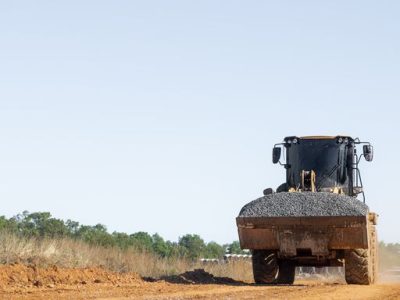
Experienced contractors use grading equipment to achieve accurate elevations before moving to the next phase.
Step 4: Install Underground Utilities First
One of the biggest mistakes on construction projects is paving before underground utilities are completed.
Utility work often includes:
- Water lines
- Sewer systems
- Storm drainage
- Electrical conduit
- Telecommunications
- Gas service
Completing utility construction first prevents future excavation that would damage newly installed asphalt.
Step 5: Grade the Site
Proper grading determines how water flows across the finished pavement.
Without adequate grading, water can collect on the surface, leading to:
- Potholes
- Surface cracking
- Premature pavement failure
- Ice formation during winter
- Drainage complaints
Contractors use laser-guided and GPS-assisted equipment to achieve accurate slopes that direct water toward approved drainage systems.
Step 6: Stabilize Weak Soil
Some sites contain soil that cannot adequately support pavement loads.
When necessary, contractors may improve soil conditions using:
- Aggregate base material
- Soil stabilization techniques
- Geotextile fabric
- Chemical stabilization
- Additional compaction
These improvements help create a stronger foundation capable of supporting long-term traffic.
Step 7: Install the Aggregate Base
The aggregate base is one of the most important layers beneath asphalt.
Typically constructed using crushed stone or gravel, the base distributes vehicle loads and improves drainage beneath the pavement.
A properly installed aggregate base helps:
- Prevent settlement
- Improve structural support
- Reduce pavement movement
- Increase overall durability
The thickness of the base depends on expected traffic and engineering recommendations.
Step 8: Compact Every Layer
Compaction is critical throughout the construction process.
Contractors compact:
- Subgrade soil
- Stabilized materials
- Aggregate base
Proper compaction removes air pockets and increases soil density, reducing the likelihood of settlement after paving.
Step 9: Verify Elevations and Drainage
Before asphalt arrives, contractors perform final inspections.
These inspections confirm:
- Proper elevations
- Finished grading
- Drainage flow
- Base thickness
- Surface smoothness
- Utility locations
Correcting problems before paving helps avoid expensive repairs after asphalt has been installed.
Step 10: Prepare for Asphalt Placement
Once preparation is complete, the site is ready for paving.
Before placement begins, contractors coordinate:
- Material deliveries
- Equipment scheduling
- Weather conditions
- Crew assignments
- Traffic control, if required
Careful coordination helps keep paving operations efficient while maintaining consistent asphalt quality.
Common Mistakes During Ground Preparation
Several common mistakes can shorten pavement life.
These include:
- Inadequate excavation
- Poor drainage design
- Insufficient compaction
- Skipping soil testing
- Installing asphalt over unstable ground
- Ignoring underground utility work
Avoiding these issues during preparation helps reduce future maintenance costs and improves pavement performance.
Why Experience Matters
Ground preparation requires more than heavy equipment. It takes experience to recognize changing soil conditions, coordinate multiple construction activities, and maintain proper elevations throughout the project.
Experienced contractors understand how to:
- Read grading plans
- Manage drainage requirements
- Coordinate utility installation
- Operate advanced grading equipment
- Maintain construction schedules
- Deliver consistent quality
Because Ground Zero Construction performs excavation, site development, utilities, concrete, and asphalt work, clients benefit from working with us throughout multiple phases of construction. Our approach helps improve communication, reduce scheduling conflicts, and keep projects moving efficiently.
Build a Strong Foundation for Long-Lasting Pavement
Every successful asphalt project begins with proper preparation beneath the surface. Careful excavation, grading, drainage planning, and compaction help create pavement that performs well for years while reducing the likelihood of costly repairs.
Planning an asphalt paving project? Contact Ground Zero Construction to discuss your site development, excavation, utility, concrete, and asphalt needs. Our experienced team proudly serves Northwest Arkansas with efficient project management and quality workmanship from start to finish.






 What Do Commercial Concrete Contractors Do?
Leave a Reply